
Define the real job before you search.
A title and job description are starting points. The search gets stronger when leadership agrees on outcomes, authority, constraints and the changes the executive is actually expected to deliver.
Staying Power
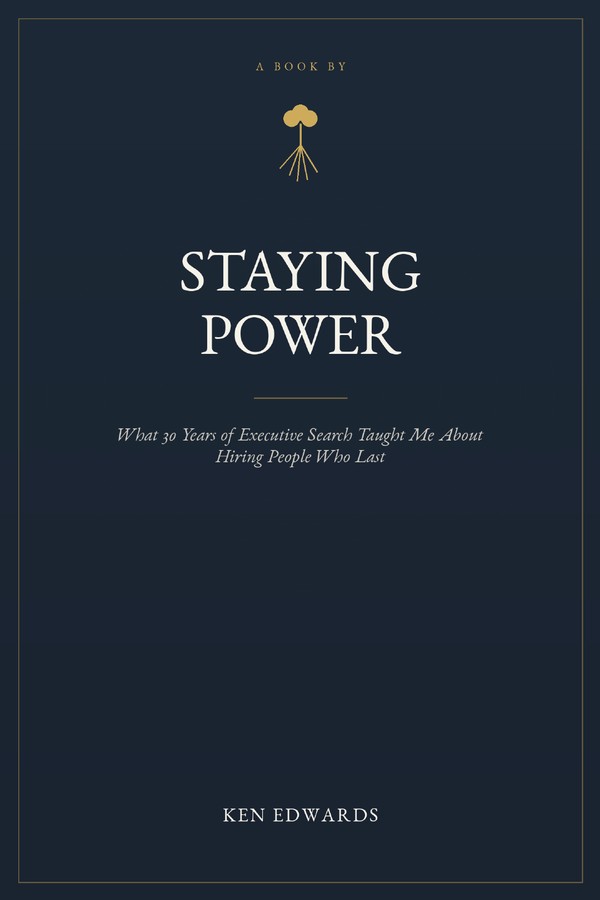
Staying Power is now available. Ken Edwards draws on more than thirty years in textile and apparel operations and executive search to explain how companies can hire leaders who keep creating value as the business changes.
Staying Power on YouTube
Short title: Technology Can Find Candidates. Judgment Chooses Them.
Ken Edwards, President of Precision Placements, shares a short perspective on executive search, leadership and the ideas behind Staying Power.
The Thirty-Year Question
Staying Power grew out of more than three decades spent on both sides of the hiring decision—as an operating executive responsible for results, as a business owner living with the consequences of hires, and as an executive recruiter following placements long after the offer was accepted.
The core idea is simple: staying power is not permanent employment. It is sustained contribution. A senior hire should be evaluated not only on what the candidate has already done, but on whether that experience will remain useful as the company, role and environment change.
“Longevity tells you how long someone stayed. Staying power tells you whether they kept growing while they stayed.”
Complimentary Preview
Get the full first chapter plus a seven-question checklist for your next senior hire.
Get Chapter 1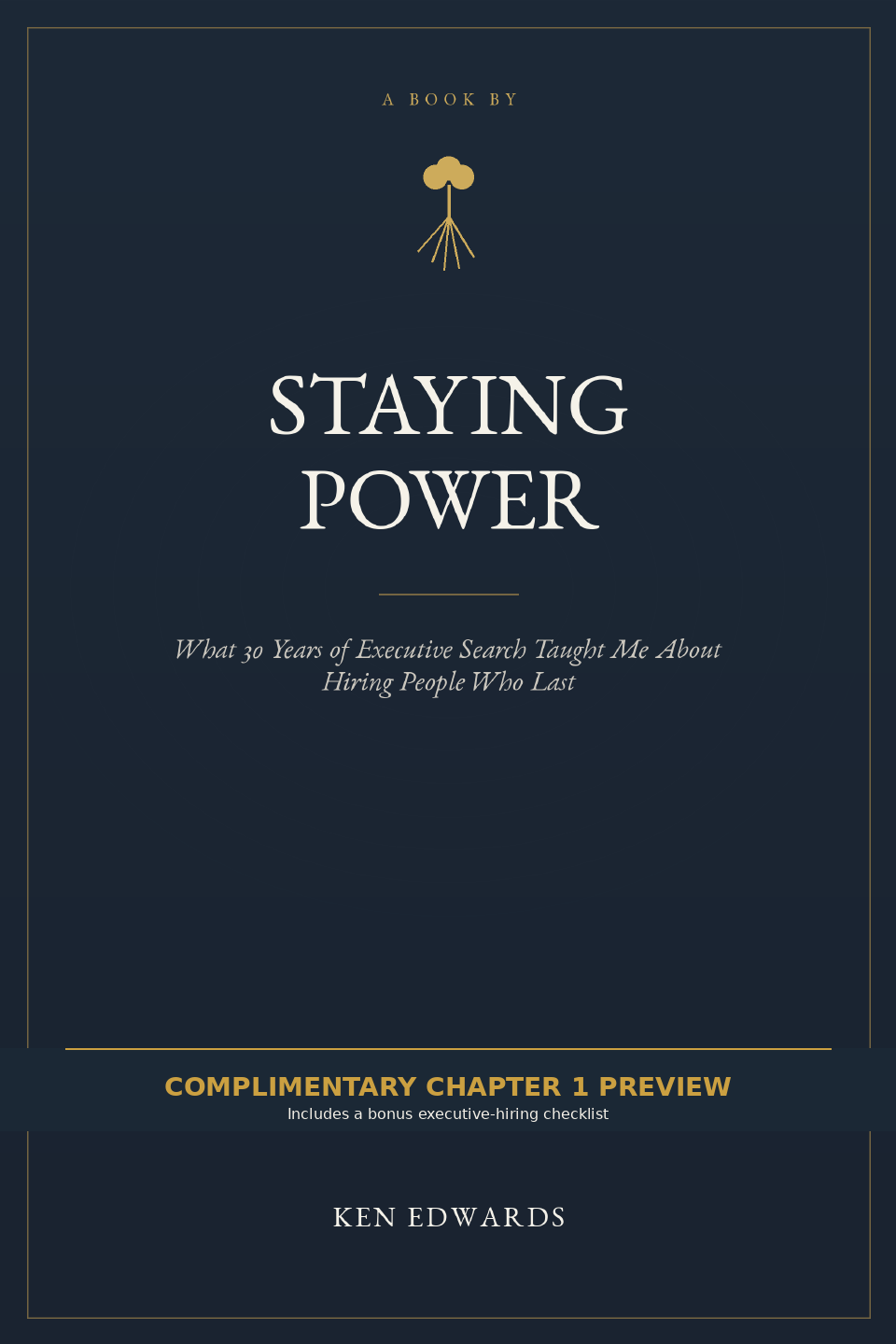
Ideas that shape the search
These principles change what we ask before a search begins, how we interview, what we listen for and how we judge whether a placement was actually successful.
A title and job description are starting points. The search gets stronger when leadership agrees on outcomes, authority, constraints and the changes the executive is actually expected to deliver.
Career chronology matters, but the logic behind the moves, the context around results and the candidate's learning trajectory often tell more.
If leadership has not agreed on what needs to change—or what the new executive will truly be allowed to change—the hire may inherit a conflict the organization has not resolved.
The useful question is not simply how long someone stayed. It is whether that person kept becoming more useful as the business changed.
Use technology to widen the search and organize evidence. Spend human attention where ambiguity, context and accountability are highest.
Chemistry gets a vote, not a veto. Strong interviewing knows what evidence matters and gives comparable candidates a fair chance to produce it.
From the book to the website
The Insights section turns selected LinkedIn discussions and book themes into evergreen articles that can be found, shared and revisited.
Why experience should create questions rather than close them.
Read the articleRead the chapter that establishes the book's central standard for a successful senior hire.
Get the previewFollow the growing archive as the six-month LinkedIn series becomes permanent website content.
Visit InsightsFrom ideas to execution
Precision Placements begins with the business problem, the mandate and the environment—not a stack of resumes.
All client and candidate conversations are confidential.